
Clean Steam System Design and Quality Attributes
Purpose and Scope
This article defines the design principles and quality attributes required to ensure a clean steam system is suitable for GMP applications throughout its lifecycle. The focus is on engineering intent and inherent system capability, not on qualification execution or routine monitoring, which are addressed separately.
The objective is to describe what constitutes an acceptable clean steam system by design, before it is ever qualified or operated.
Design Philosophy
Clean steam systems shall be designed using conservative, proven utility engineering practices appropriate for direct-contact GMP applications. The design shall support:
- Chemical purity of steam condensate
- Consistent and predictable operation
- Effective drainage and condensate removal
- Long-term maintainability without degradation of quality
Clean steam design is not an exercise in innovation. It is an exercise in risk elimination.
Clean Steam Generator and Distribution Overview
The diagram below illustrates the typical configuration of a clean steam system used for GMP applications, highlighting the relationship between feed water, steam generation, distribution, and points of use. The intent is to present the core system elements and functional flow without introducing detailed design features or qualification requirements.
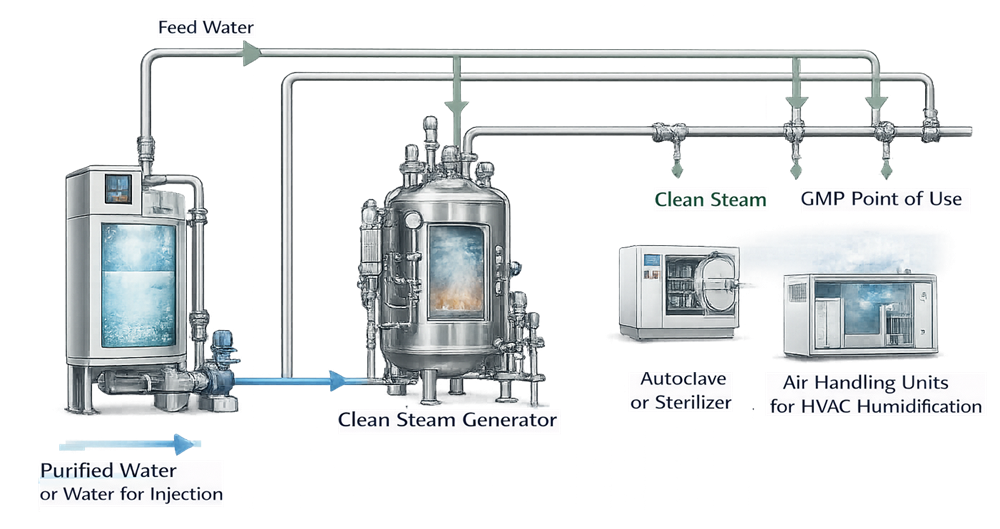
This overview supports understanding of how clean steam quality is established at the point of generation and preserved through distribution to downstream GMP applications.
Feed Water Quality Expectations
Clean steam quality begins with the feed water source. Typical feed water sources include:
- Purified Water
- Water for Injection, where justified by risk or facility policy
The selected feed water quality shall be appropriate for the intended use of the clean steam condensate and shall be controlled upstream of the steam generator. Downstream correction of poor feed water quality is not an acceptable design strategy.
Clean Steam Generator Design
As shown in the system overview, the clean steam generator is the defining component of the system and shall be:
- Constructed of suitable sanitary materials
- Designed to minimize entrainment and carryover
- Fully drainable
- Dedicated to clean steam service
Design features shall prevent introduction of non-volatile contaminants into the steam and support stable generation across the operating rang
Distribution System Design Principles
Clean steam distribution systems shall be designed to maintain steam quality from the generator to the point of use. Key principles include:
- Continuous slope toward drains
- Effective condensate removal
- Elimination of dead legs
- Appropriate steam trap selection for clean service
- Materials and joining methods consistent with hygienic utilities
Distribution design is where most clean steam systems succeed or fail. Poor drainage is a recurring root cause of quality issues.
Drainability and Condensate Management Concept
The diagram below illustrates the design intent for effective drainage and condensate management in clean steam distribution systems. Proper slope, condensate removal, and avoidance of stagnant sections are fundamental to maintaining steam quality at the point of use.
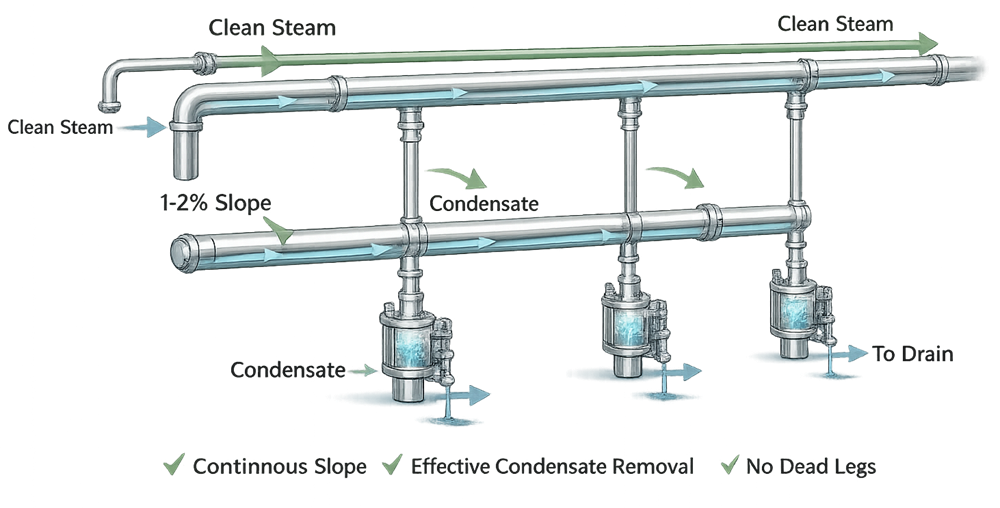
This illustration is conceptual and is intended to convey functional expectations, not detailed piping configurations.
Defined Quality Attributes of Clean Steam
Clean sClean steam quality attributes are defined in terms of condensate suitability at the point of use, not steam appearance. As illustrated in the quality attribute linkage diagram, these attributes are the cumulative outcome of feed water quality, steam generation, and distribution system design.
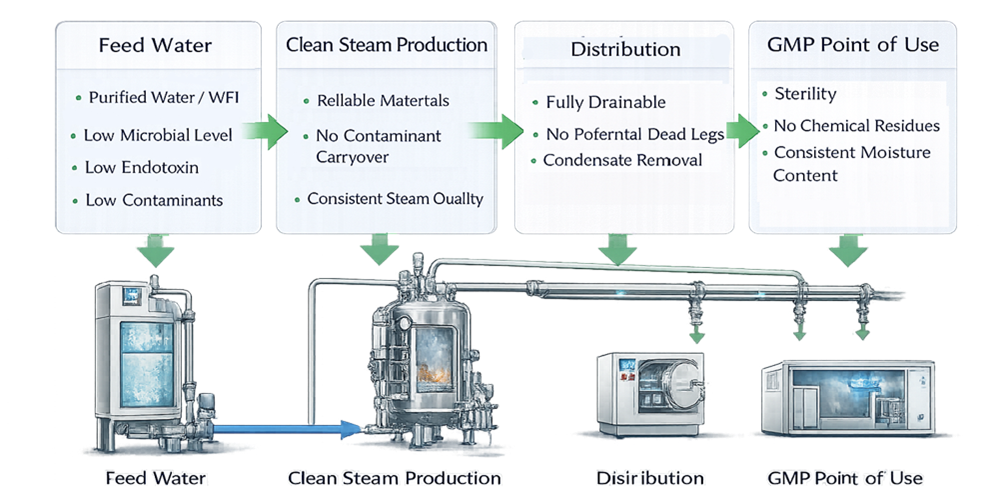
Typical quality attributes include:
- Chemical purity appropriate for the intended GMP application
- Absence of non-volatile residues in condensate
- Consistent steam quality under defined operating conditions
Quality attributes shall be defined to support objective verification during qualification and continued assurance through routine monitoring.
Interface with GMP Systems
Clean steam systems commonly interface with:
- Process equipment
- Sterilizers and autoclaves
- HVAC humidification systems
These interfaces shall be clearly defined and controlled. The clean steam system shall not rely on downstream equipment to compensate for deficiencies in steam quality.
Engineering and GMP Design Position
From an engineering and GMP perspective, clean steam systems shall be:
- Designed using conservative, proven engineering principles
- Constructed to ensure effective drainage and condensate removal
- Configured to support clear understanding of system function and boundaries
- Designed to minimize the potential for improper use or unintended modification
Excessive complexity does not enhance compliance. Robust design supports sustained control over the system lifecycle.Complexity does not increase compliance. Good design does.