
Clean Steam System Qualification, Monitoring, and Requalification
Purpose and Scope
This article defines the qualification strategy, ongoing monitoring expectations, and requalification approach for clean steam systems used in GMP applications. The focus is on establishing and maintaining documented evidence of control over the clean steam system throughout its operational lifecycle.
Clean steam is a direct-impact utility. As such, qualification and lifecycle oversight shall be risk-based, structured, and commensurate with system complexity and intended use.
Qualification Strategy Overview
Clean steam system qualification shall demonstrate that:
- The system is installed as designed
- The system operates within defined and controlled parameters
- The system consistently delivers clean steam suitable for its intended GMP applications
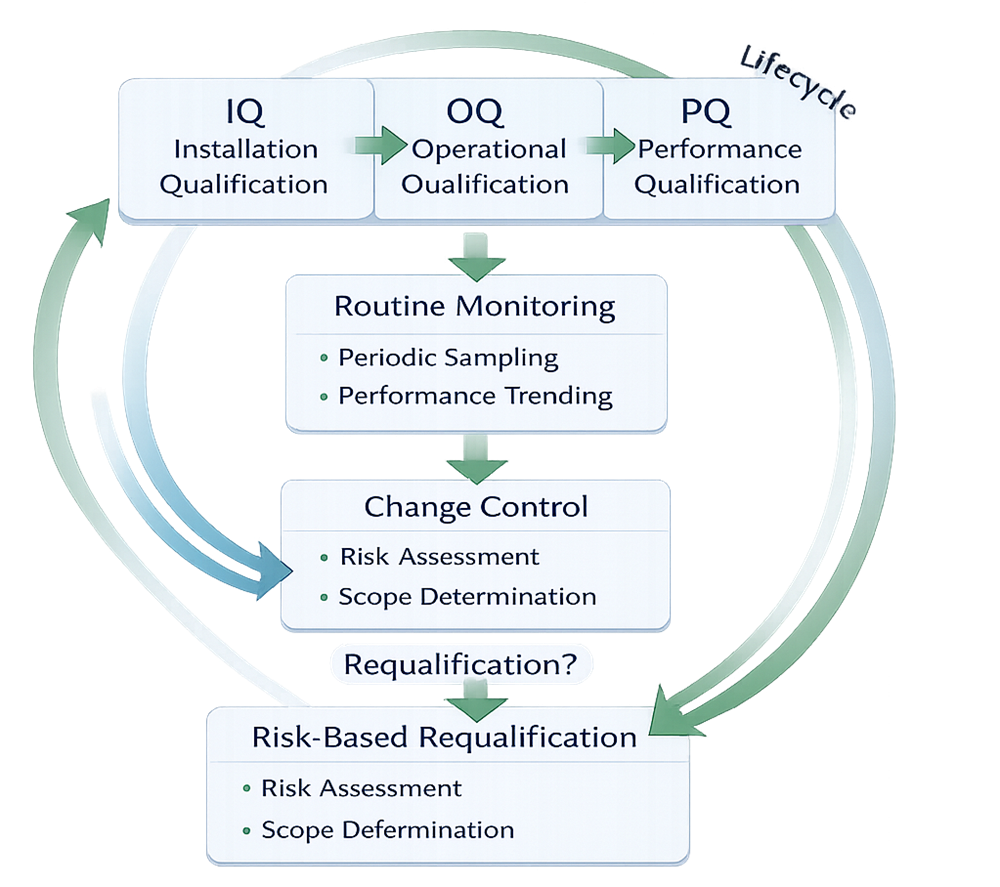
Qualification shall address the entire system, including:
- Feed water interface
- Clean steam generator
- Distribution system up to defined points of use
- Interfaces with downstream GMP equipment
Qualification is not an isolated event. It establishes the baseline against which all future monitoring, change control, and requalification decisions are made.
Risk-Based Qualification Approach
A documented risk assessment shall be used to define:
- Qualification scope
- Testing depth
- Sampling locations
- Acceptance criteria
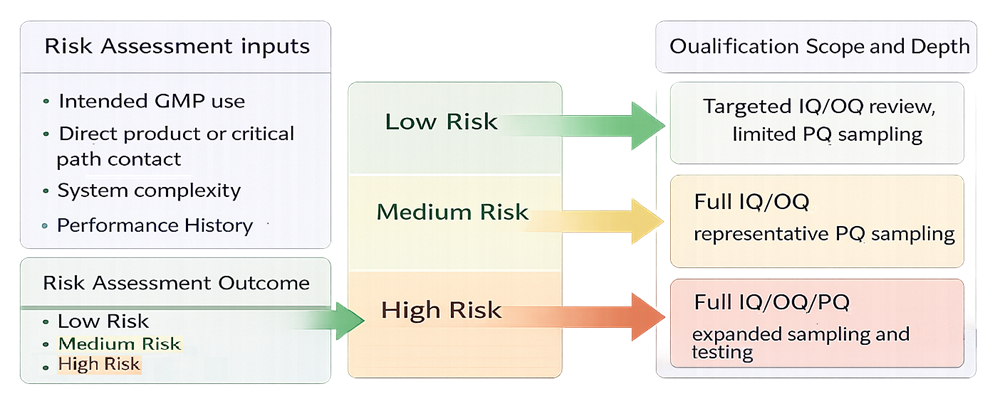
Risk evaluation shall consider, at minimum:
- Direct vs indirect product contact
- Likelihood of condensate contact
- System complexity and size
- Historical performance and known failure modes
- Consequences of steam quality failure at each point of use
Higher-risk applications require greater qualification depth, not broader paperwork.
Installation Qualification (IQ)
IQ shall verify that the clean steam system is installed in accordance with approved design documentation and engineering standards.
Typical IQ elements include:
- Verification of materials of construction
- Confirmation of sanitary design and weld quality
- Verification of slopes, drain points, and steam traps
- Confirmation of system segregation from plant steam
- Verification of utilities, instruments, and interfaces
- Review of as-built drawings and component identification
Drainability verification is not optional. It is a fundamental design attribute and shall be confirmed during IQ.
Operational Qualification (OQ)
OQ shall demonstrate that the clean steam system operates consistently within defined operating ranges and responds appropriately to normal operating conditions.
OQ activities typically include:
- Verification of operating pressures and temperatures
- Control and alarm functionality, where applicable
- Steam generator operating stability
- System start-up and steady-state operation
- Verification of condensate removal during operation
OQ shall focus on functional performance, not product simulation.
Performance Qualification (PQ)
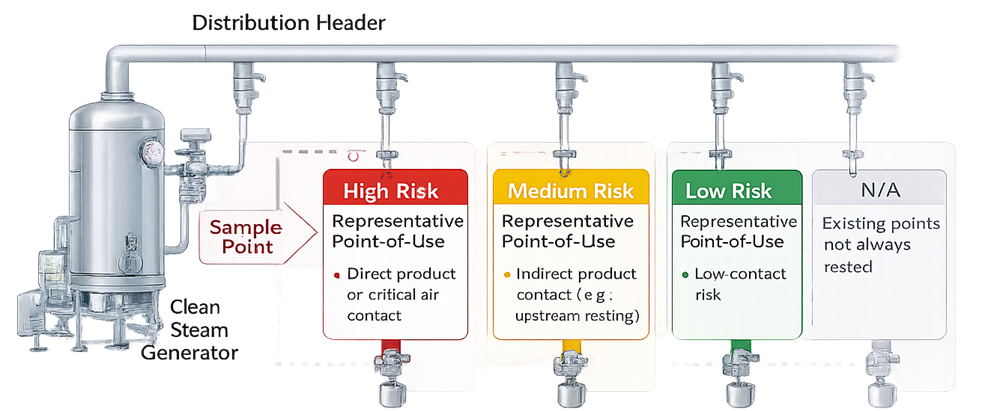
PQ shall demonstrate that clean steam delivered to points of use meets defined quality attributes under normal operating conditions.
PQ typically includes:
- Condensate sampling at representative points of use
- Chemical quality testing aligned with intended use
- Confirmation of absence of non-volatile residues
- Demonstration of consistent quality over time
Sampling locations and test frequency shall be risk-based. Testing every point of use is rarely justified if system design and distribution are well controlled.
Monitoring and Continued Verification
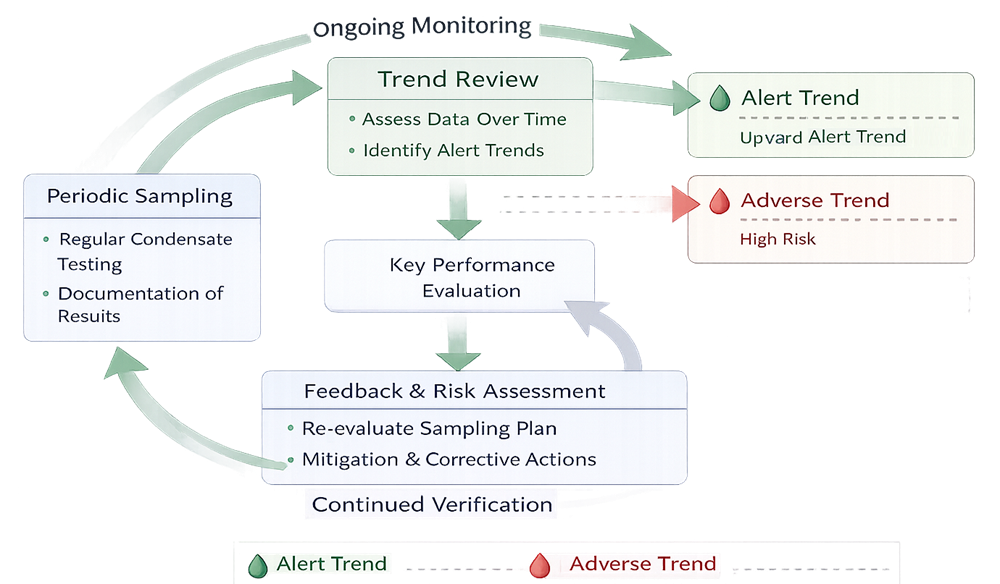
Routine monitoring is the primary mechanism for demonstrating continued control after qualification. Monitoring may include:
- Periodic condensate testing
- Review of operating trends
- Preventive maintenance of steam traps and drains
- Review of deviations and corrective actions
Monitoring data shall be trended. Isolated results are less meaningful than performance over time.
Risk Assessment in Ongoing Control
Risk assessment does not end at qualification. It shall be applied to:
- Monitoring frequency
- Sampling plans
- Change evaluation
- Requalification decisions
Risk shall be reassessed when:
- System configuration changes
- Performance trends shift
- Failures or deviations occur
- Intended use changes
Requalification Triggers
Requalification is not periodic by default. It is event-driven and risk-based. Typical requalification triggers include:
- Replacement or modification of the steam generator
- Significant changes to feed water quality or source
- Distribution system modifications
- Repeated adverse trends or failures
- Extended system downtime
- Changes in intended GMP use
The scope of requalification shall be justified based on risk, not precedent.
Requalification Scope and Depth
Requalification activities shall be defined based on a documented risk assessment and may include:
- Targeted testing of affected system elements
- Partial requalification of defined subsystems
- Full system requalification
The scope and depth of requalification shall be commensurate with risk and shall reflect:
- The nature and extent of the change or event
- The system elements potentially impacted
- Confidence in continued control based on monitoring and trend history
- Available historical qualification and performance data
Requalification scope shall be justified and documented. Document review alone may be acceptable only when risk is demonstrably low and supported by stable performance history.
Lifecycle Documentation Expectations
At a minimum, the following shall be maintained:
- Approved qualification protocols and reports
- Risk assessments
- Monitoring and trending records
- Change control documentation
- Requalification justifications
Documentation shall support traceability from design intent to current state of control.
Practical GMP Position
From a GMP and engineering standpoint:
- Qualification establishes the baseline
- Monitoring maintains confidence
- Requalification restores assurance when risk changes
Clean steam systems fail compliance expectations not because of missing tests, but because of weak lifecycle control.