
Facility Automation and Monitoring Overview
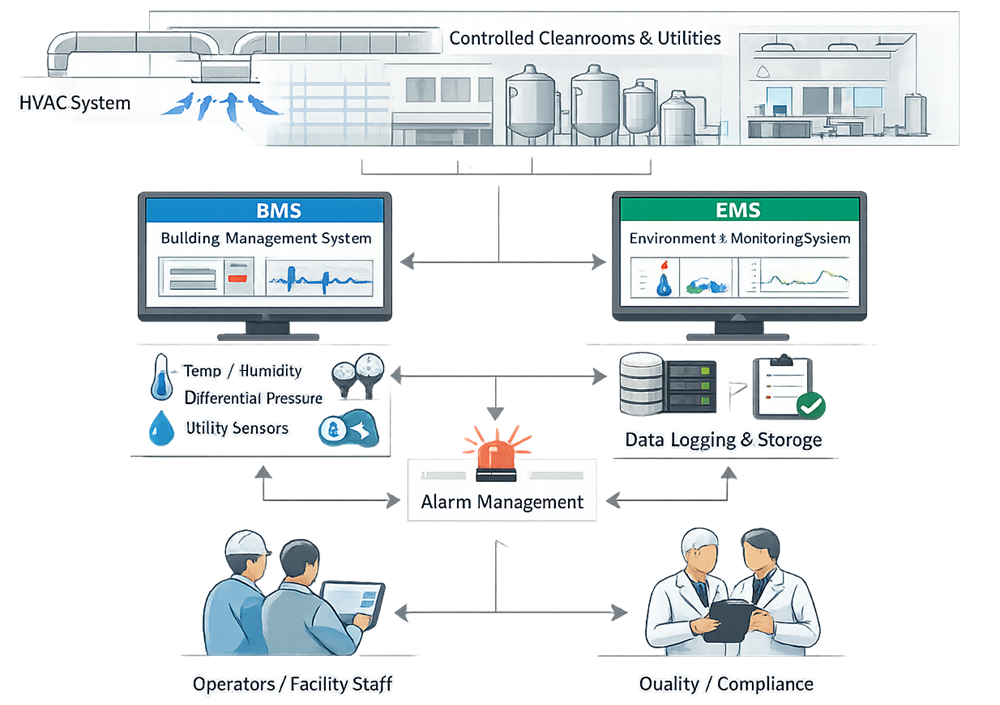
Facility automation and monitoring systems provide the infrastructure used to maintain, observe, and document controlled conditions in GMP-regulated facilities. These systems support consistent operation of building systems, enable timely detection of deviations, and generate objective records demonstrating that environmental and utility conditions remain within defined limits. When properly designed and qualified, automation and monitoring translate facility control strategies into repeatable, verifiable operation throughout the facility lifecycle.
Purpose and Role in GMP Facilities
Automation and monitoring systems serve three primary purposes:
- Maintain defined operating parameters within validated ranges
- Provide real-time visibility into facility conditions
- Generate reliable records to demonstrate ongoing control
These systems do not replace good design or proper qualification. They reinforce them. Poorly designed systems cannot be fixed by automation, and excessive automation does not compensate for weak control strategies. This is a hard lesson many facilities learn late.
Typical Systems in Scope
Facility automation and monitoring typically include the following system families:
- Building Management Systems controlling HVAC operation
- Environmental Monitoring Systems tracking critical parameters
- Utility monitoring for gases, water, and compressed air
- Alarm and notification infrastructure
- Data acquisition, trending, and reporting components
Each system may operate independently, but in mature facilities they are logically integrated to support coordinated control and efficient deviation management.
Parameters Commonly Monitored
Monitoring focuses on parameters with a direct or indirect impact on product quality and regulatory compliance, including:
- Temperature
- Relative humidity
- Differential pressure
- Airflow status
- Equipment operational states
- Utility conditions such as pressure or conductivity
The selection of parameters is risk-based. Monitoring everything is neither practical nor defensible.
Data Integrity and Record Expectations
Automation and monitoring systems generate GMP records. As such, they must support:
- Secure data capture
- Time-stamped records
- Audit trails
- Controlled access and role-based permissions
- Reliable data retention and retrieval
Automation and monitoring systems generate GMP data and must support data integrity principles, including that records are attributable, legible, contemporaneous, original, and accurate. System design, access controls, audit trails, time synchronization, and data retention practices are expected to ensure that monitoring data can be relied upon to demonstrate a sustained state of control.
Alarms and Event Management
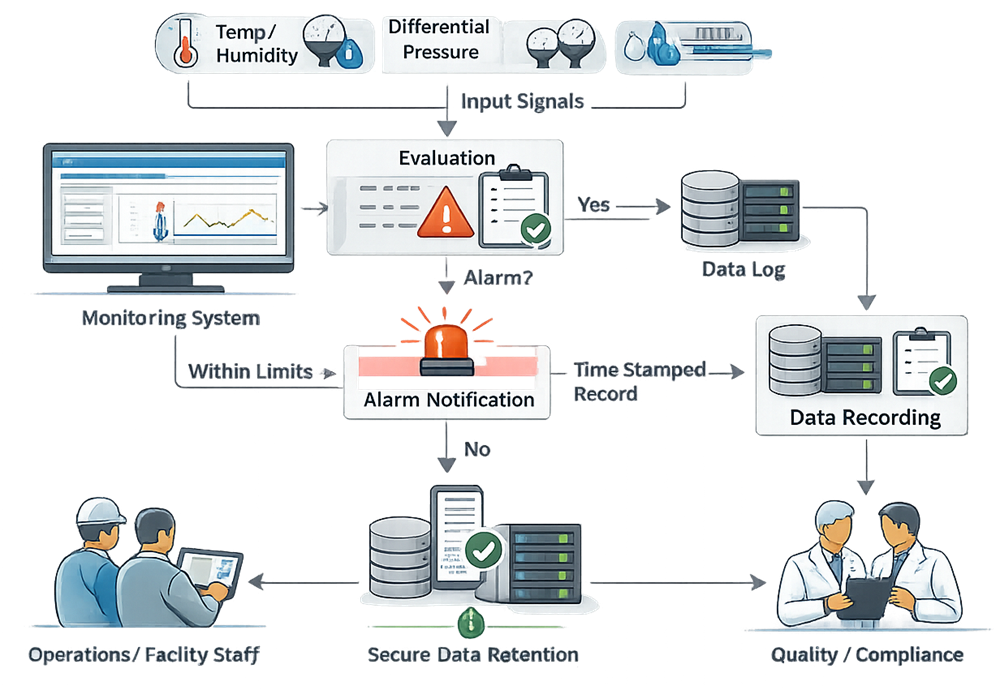
Alarm functionality is an integral component of facility automation and monitoring system design. Alarm management is expected to support timely detection of abnormal conditions and enable appropriate operational response. Effective alarm management includes:
- Clearly defined alert and alarm thresholds
- Distinction between informational alerts and action-required alarms
- Timely notification to appropriate personnel
- Documented response expectations
Alarm fatigue occurs when alarm frequency or poor alarm rationalization results in repeated, non-actionable notifications. Over time, this diminishes operator responsiveness and undermines the effectiveness of the alarm management strategy.
Integration With Qualification and Lifecycle Activities
Facility automation and monitoring systems are directly tied to qualification activities:
- Design Qualification confirms monitoring intent and coverage
- Installation Qualification verifies sensors, wiring, and interfaces
- Operational Qualification challenges control logic and alarms
- Ongoing monitoring supports continued verification
These systems also play a central role in requalification decisions and periodic review by providing objective performance history.
Practical Perspective
Automation and monitoring should be boring. Stable systems that rarely draw attention are usually doing their job. Systems that require constant adjustment, frequent overrides, or repeated justification are typically compensating for upstream design or qualification weaknesses.
Well-implemented facility automation supports compliance quietly, consistently, and without drama. That is the benchmark worth aiming for.