
HVAC Requalification Triggers and Periodic Review
HVAC requalification and periodic review are mechanisms to confirm that an HVAC system remains in a state of control after initial qualification. Requalification is not performed on a fixed calendar by default. It is triggered by risk, change, or evidence of performance drift. Periodic review provides the documented rationale to maintain, extend, or adjust requalification activities.
The objective is continued compliance through evidence-based oversight, not routine repetition of qualification testing.
Purpose and Scope
This article addresses:
- Conditions that trigger HVAC requalification
- The role of periodic review in assessing continued system performance
- The relationship between change control, monitoring data, and requalification scope
The principles described apply to HVAC systems supporting GMP manufacturing, controlled storage, laboratories, and support areas where environmental conditions impact product quality or compliance.
Requalification Triggers
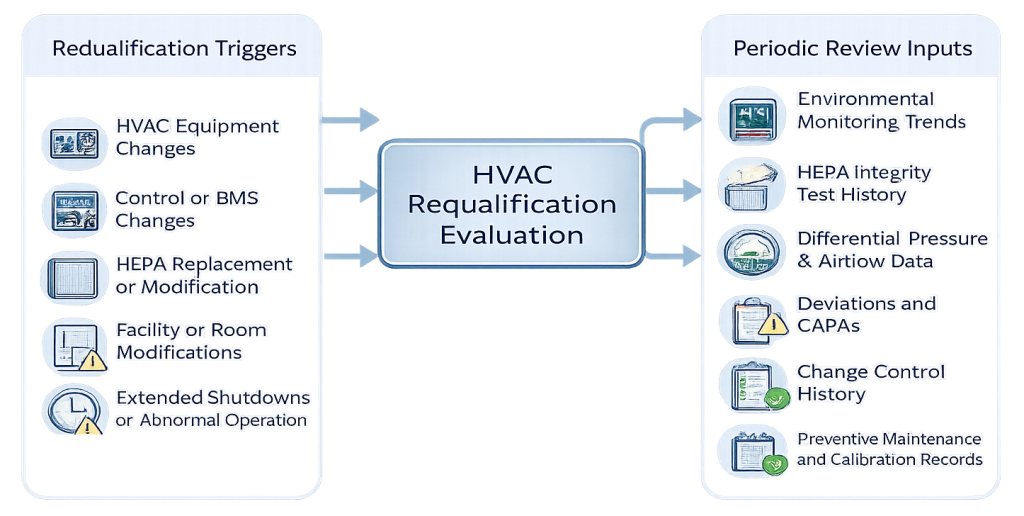
HVAC requalification is initiated when there is a reasonable potential impact to environmental control, contamination risk, or regulatory compliance. Triggers are typically grouped into defined categories. HVAC requalification decisions are driven by a combination of defined triggers and periodic review of system performance data.
Changes to the HVAC System
Requalification is required when changes may affect airflow, filtration, pressure relationships, or control logic, including:
- Replacement or modification of air handling units, fans, or motors
- Changes to ductwork, diffusers, or returns
- Replacement or upgrade of HEPA filters beyond routine maintenance
- Modifications to control strategies, setpoints, or sequences of operation
- BMS or control system upgrades affecting HVAC operation
The depth of requalification depends on the scope and impact of the change.
Facility or Room Modifications
Physical changes to the facility can directly impact airflow and pressure performance. Examples include:
- Room reconfiguration or resizing
- Addition or removal of doors, pass-throughs, or partitions
- Changes to room classification or use
- Introduction of new equipment with significant heat or airflow demand
Such changes require evaluation of airflow balance, pressure differentials, and air exchange rates.
Performance Degradation or Adverse Trends
Requalification is triggered when evidence indicates loss of control or declining performance, such as:
- Repeated or unexplained environmental monitoring excursions
- Failure to maintain pressure differentials
- HEPA integrity test failures
- Alarms related to airflow, temperature, or humidity outside established limits
- Unfavorable trends identified through BMS or EMS data
These triggers are data-driven and often identified during periodic review.
Extended Shutdowns or Abnormal Operating Conditions
Requalification may be required following:
- Extended HVAC shutdowns
- Loss of power or control system failure
- Operation outside validated ranges for extended periods
The decision is based on duration, severity, and risk to controlled conditions.
Periodic Review of HVAC Systems
Periodic review is the structured, documented evaluation of HVAC system performance over time. Its purpose is to confirm continued control and justify requalification decisions.
Typical Review Inputs
Periodic review commonly includes:
- Environmental monitoring trends, viable and non-viable
- HEPA integrity test history
- Differential pressure and airflow trend data
- Deviation and CAPA history related to HVAC performance
- Change control history since last qualification
- Preventive maintenance and calibration records
The review focuses on evidence, not assumptions.
Review Frequency
Periodic review intervals are risk-based and typically aligned with:
- System criticality
- Room classification
- Regulatory expectations
- Performance history
Annual review is common for critical HVAC systems, though the interval may be extended or shortened based on documented justification.
Determining Requalification Scope
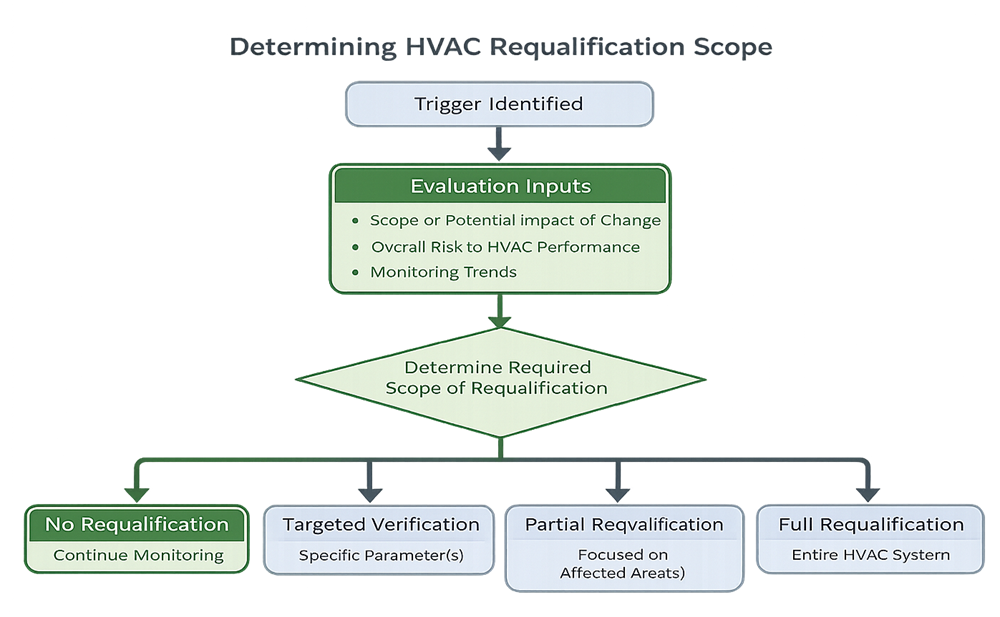
Requalification scope is not binary. It may range from targeted verification to partial or full requalification. Possible outcomes include:
- No requalification required, continued monitoring only
- Targeted verification of specific parameters
- Partial requalification focused on affected areas
- Full HVAC requalification
The decision is documented and justified based on risk and performance evidence.
Documentation and Traceability
Requalification decisions and periodic reviews must be documented in a manner that is traceable and defensible. Documentation typically includes:
- Periodic review report or summary
- Rationale for requalification decisions
- References to supporting data and trends
- Approved actions and timelines
This documentation supports regulatory inspections and internal quality oversight.
Practical Perspective
HVAC requalification is not about repeating qualification because time has passed. It is about responding to change, evidence, and risk. A disciplined periodic review process allows organizations to maintain control, avoid unnecessary testing, and demonstrate a mature, compliant approach to HVAC system lifecycle management.
When performed correctly, periodic review becomes the decision engine for requalification, not an administrative exercise.