
Temperature, Humidity, and Air Change Control Parameters
Temperature, humidity, and air change rates are fundamental environmental control parameters in GMP facilities. They are not comfort settings and they are not operational conveniences. These parameters define the environmental conditions under which products are manufactured, processed, and stored, and they must remain within established limits to maintain a state of control.
Each parameter must be defined during design, verified during qualification, and sustained during routine operations. Failure to control any one of them compromises the overall environmental control strategy.
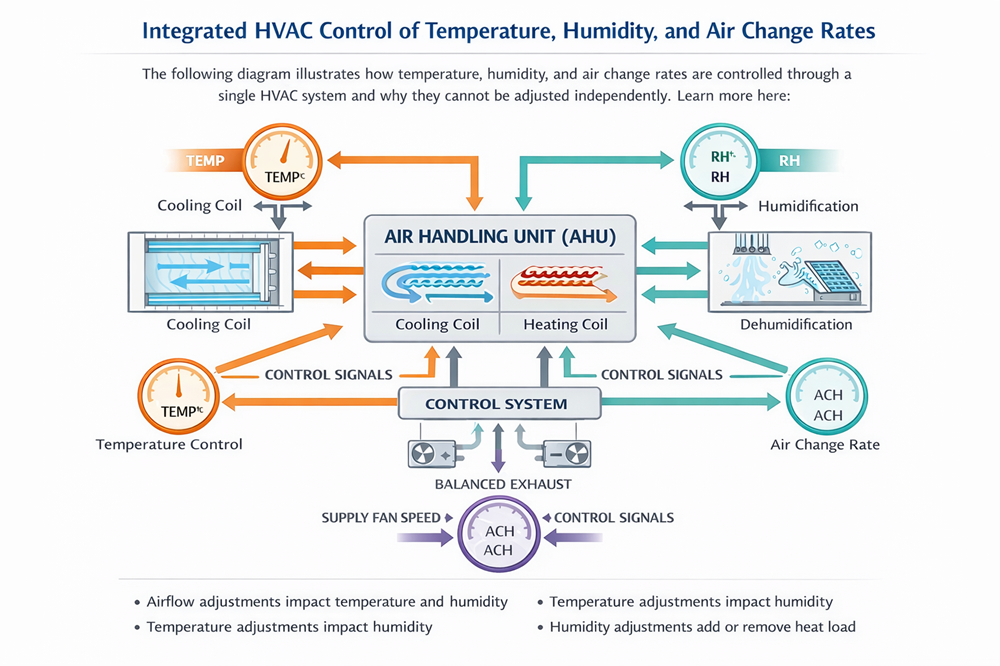
The following diagram illustrates how temperature, humidity, and air change rates are controlled through a single HVAC system and why they cannot be adjusted independently.
Regulatory and GMP Context
GMP regulations require facilities to maintain environmental conditions appropriate for the intended operations. While specific numerical limits are not always prescribed, regulators expect firms to establish justified operating ranges and to demonstrate consistent control.
Temperature, humidity, and air change rates collectively support:
- Product stability and material integrity
- Control of microbial growth and particulate levels
- Consistent airflow patterns and pressure differentials
- Reliable performance of validated processes
Inspectors evaluate these parameters not in isolation, but as an integrated system that supports contamination control.
Temperature Control Parameters
Temperature control must support both process requirements and personnel occupancy without destabilizing airflow or pressure relationships. Temperature control depends on representative sensing and stable HVAC response.
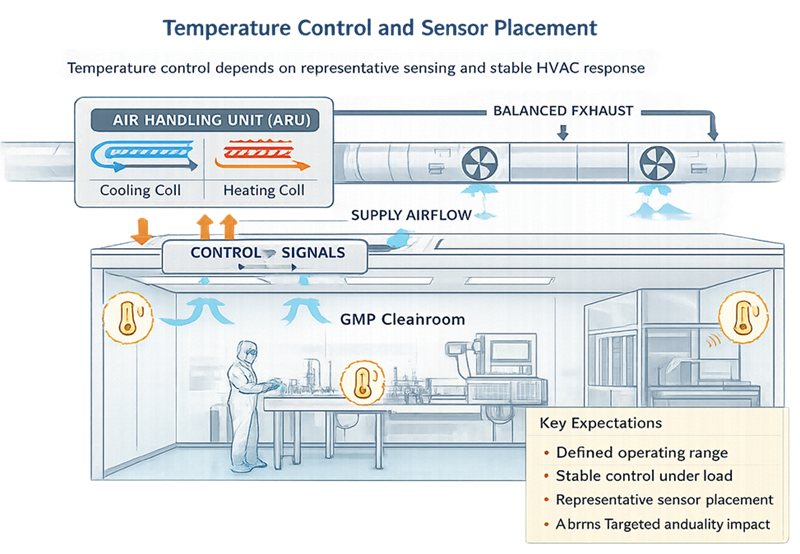
Key expectations include:
- Defined normal operating ranges based on product, process, and equipment needs
- Demonstrated stability under normal and worst-case load conditions
- Sensor placement representative of the controlled space
- Alarm limits aligned with potential quality impact
Temperature excursions cannot be dismissed based on assumptions. Where impact is considered low, the rationale must be documented and technically defensible.
Humidity Control Parameters
Humidity control is frequently underestimated and is a common source of inspection observations. Humidity control is critical to preventing condensation and microbial risk.
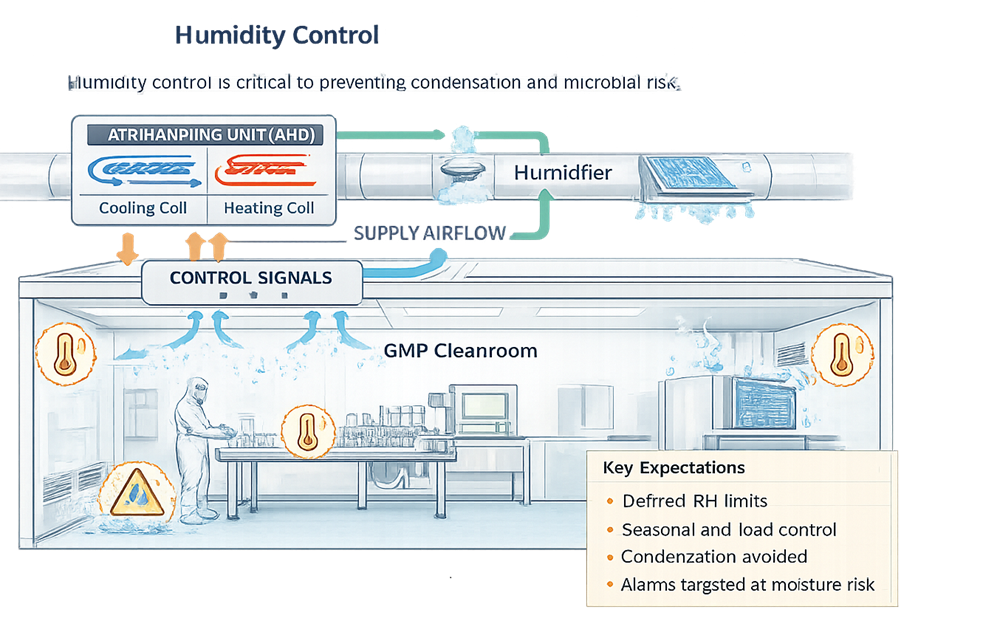
Humidity must be controlled to:
- Limit microbial growth
- Prevent condensation on surfaces and equipment
- Protect hygroscopic materials and components
- Maintain acceptable conditions for operators without compromising cleanliness
Seasonal performance is critical. A system that maintains humidity during mild conditions but fails during summer or winter extremes does not meet GMP expectations.
Air Change Rate Parameters
Air change rates support contaminant dilution, removal, and maintenance of room classification. Air change rates support contaminant dilution and room classification control.
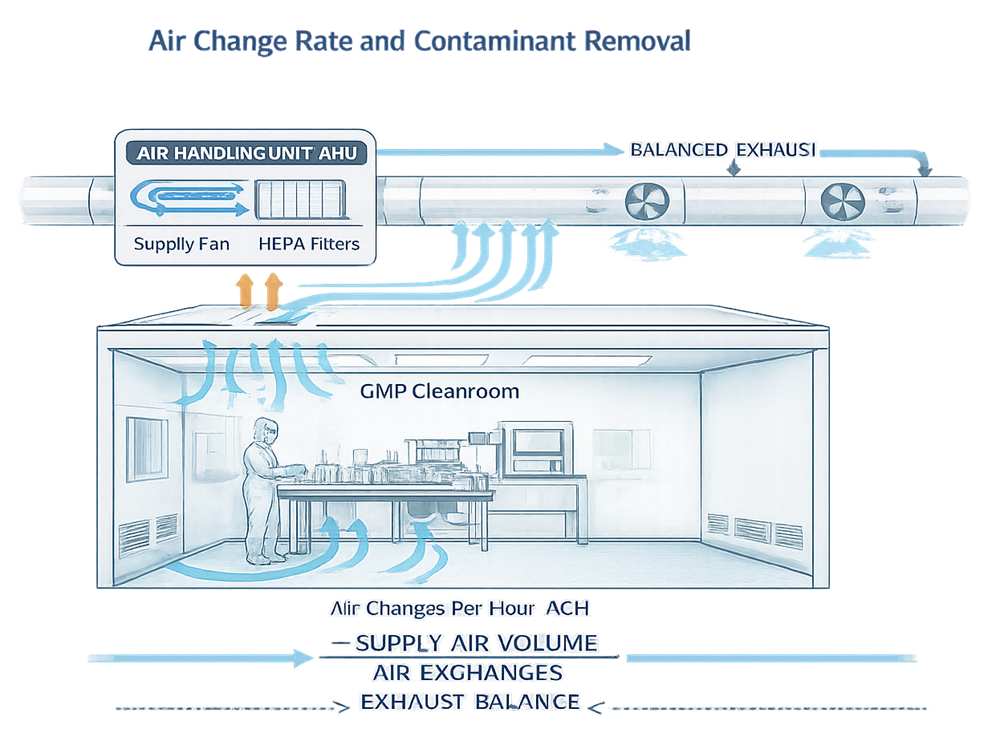
Important principles include:
- Air change rates must be appropriate for room classification and activity level
- Higher air change rates do not automatically result in better environmental control
- Excessive air changes can destabilize temperature, humidity, and pressure
- Target air change rates must be justified based on risk, not tradition alone
Air change rates should not be used to compensate for poor airflow distribution or inadequate room design.
Integrated Environmental Control
Temperature, humidity, and air change rates cannot be designed, qualified, or managed independently.
They must be designed together, verified together, and maintained together.
A change to one parameter almost always affects the others. Effective environmental control requires a coordinated control strategy rather than isolated setpoint adjustments.
Qualification and Ongoing Verification
During qualification, the facility must demonstrate:
- Stable control within defined operating ranges
- Performance under worst-case seasonal and occupancy conditions
- Correlation between installed sensors and independent measurement tools
- Functional alarms and appropriate response actions
Operational Qualification establishes initial control. Ongoing monitoring and periodic review confirm that the state of control is maintained over time.
Operational Reality
From an inspection perspective, instability in environmental parameters raises immediate concern.
- Unstable temperature trends lead to scrutiny of airflow performance
- Unstable airflow leads to questions about pressure differentials
- Weak pressure control undermines the overall HVAC qualification strategy
Environmental control is evaluated as a system. Weakness in any single parameter erodes confidence in the whole.