
Utility System Lifecycle, Monitoring, and Risk-Based Control
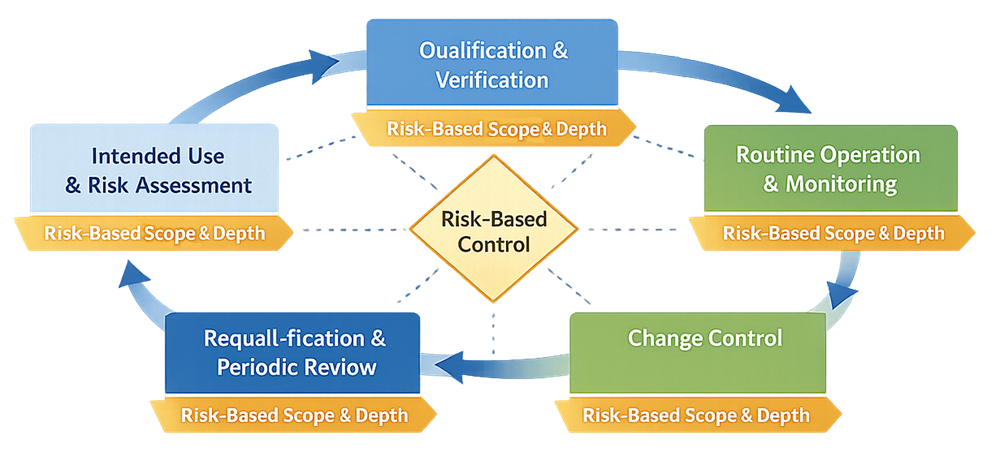
Utility systems in GMP manufacturing are managed using a lifecycle approach intended to ensure continued fitness for use over time. This lifecycle does not end at qualification. It extends through routine operation, monitoring, change control, and periodic requalification to maintain a sustained state of control.
Lifecycle control is applied proportionally, based on the intended use of the utility system and its potential impact on product quality.
Utility System Lifecycle Overview
The utility system lifecycle begins with definition of design intent and risk assessment and continues through qualification, routine operation, and ongoing performance evaluation. Each lifecycle stage builds on documented evidence from prior stages and is supported by quality system controls. Key lifecycle elements include:
- Definition of intended use and impact classification
- Design aligned with regulatory and operational requirements
- Qualification and performance verification
- Routine monitoring and trending
- Formal change control
- Periodic review and requalification
Failure to manage any lifecycle stage increases the risk of loss of control and regulatory noncompliance.
Risk-Based Control of Utility Systems
Utility systeUtility systems are controlled using a risk-based approach. The extent of qualification, monitoring, and lifecycle control is determined by the system’s intended use and its potential impact on product quality. Risk considerations include:
- Direct or indirect impact on product quality
- Potential for contamination or cross-contamination
- System complexity and credible failure modes
- Historical performance and reliability
Risk-based control defines the depth of qualification, the extent of routine monitoring, and the frequency of requalification. Utility systems with higher risk to product quality require more stringent and comprehensive controls. Lower-risk utility systems may be managed using streamlined approaches, provided those approaches are scientifically justified and supported by performance history.
Utility System Monitoring and Trending
Routine monitoring is the primary mechanism for demonstrating continued control of utility systems during operation. Monitoring programs are established to verify that systems remain within defined operating and quality limits. Effective monitoring programs:
- Focus on critical quality and performance parameters
- Use scientifically justified alert and action limits
- Generate data suitable for trending and periodic review
- Support timely detection of adverse trends
Trending evaluates system performance over time rather than isolated data points. Adverse trends, recurring alerts, or unexplained variability indicate potential loss of control and require investigation.
Performance Review and Periodic Evaluation
Utility system performance must be reviewed periodically to confirm continued suitability for intended use. Performance reviews typically consider:
- Monitoring and trending data
- Deviations, excursions, and investigations
- Maintenance history
- Changes implemented during the review period
Periodic evaluation supports decisions related to requalification scope, monitoring adjustments, and preventive actions.
Change Control and Requalification
All changes to utility systems are subject to formal change control. Changes are evaluated for their potential impact on product quality, system performance, and regulatory compliance.
Change impact assessments determine whether requalification is required and define the appropriate scope. Requalification activities are risk-based and may range from targeted verification to full requalification, depending on the nature of the change and available performance history. Requalification is also triggered by:
- Adverse performance trends
- Repeated deviations or excursions
- Extended periods of operation without review
Maintaining a State of Control
Lifecycle management, monitoring, and risk-based control collectively ensure that utility systems remain in a state of control throughout their operational life. These controls provide documented evidence that utilities consistently support compliant manufacturing operations and continue to meet their defined intended use.
This article establishes the control framework applied across all GMP utility systems. Utility-specific articles describe how these principles are implemented for individual system types.